
Since it was first coined over [27] years ago, no precise definition for what [the deep state] means has fully taken hold. … According to a Monmouth poll from the spring of 2018, …almost three-quarters of respondents agreed such a “deep state” existed. – Ryan Gingeras, How the Deep State Came to America: A History (February 4, 2019)
A pair of landmark decisions were handed down by the US Supreme Court (SCOTUS) on June 29 regarding, what President Trump has often called, “the deep state.” The government agencies, at the center of the two cases, were the Federal Trade Commission (FTC) and Federal Reserve (the Fed). POTUS won regarding the FTC, but not against the Fed.
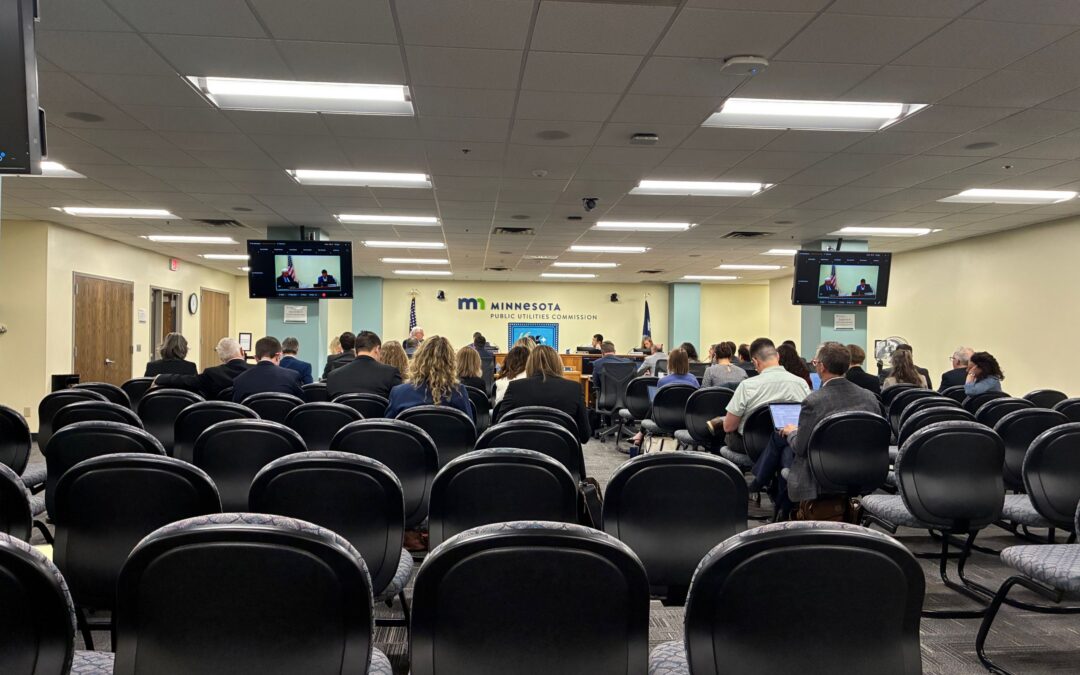
This raises, not just an interesting, but an important question at the state level: Is the Minnesota Public Utilities Commission (PUC) more akin to the Fed or FTC? My definition of “deep state” is not a conspiracy-based one, but an incentives-based one: unelected bureaucrats governing without proper accountability to the people’s elected representatives.
SCOTUS Cases
Both SCOTUS cases were about whether a sitting US president was in charge of the entire executive branch of the federal government or not. The particular issue at stake was the ability to fire, at will, without cause. The FTC case ruled in favor of that, for all executive agencies, bar one. The other case ruled which agency was the one, that being the Fed.
The FTC and Fed cases are officially know as Trump v. Slaughter and Trump v. Cook respectively. Although I do have a university degree in law, as well as in economics, I am no lawyer. However, as a regulatory economist for much of my career, I have dealt with legislation, regulation and judicial decisions many times, both here and abroad.
The prestigious National Constitution Center summarises the two cases, including:
Re the FTC: Congress has endowed formerly independent agencies not just with executive authority, but with enormous legislative and judicial powers as well. And now the President enjoys control over all those powers too. – Justice Neil Gorsuch
Re the Fed: Acceptance of the Government’s position would in effect transform the Federal Reserve’s for-cause protection into at-will employment—an interpretive leap out of step with the statute Congress enacted and our Nation’s tradition of central banking protected from political interference. – Chief Justice John Roberts
I am no fan of the Fed in particular, nor of central banks in general, as I have written about many times in the past decade or so. But to be fair to the Fed, it is not an executive agency:
The Federal Reserve System is not “owned” by anyone. The Federal Reserve was created in 1913 by the Federal Reserve Act to serve as the nation’s central bank. The Board of Governors in Washington, D.C., is an agency of the federal government and reports to and is directly accountable to the Congress.
PUC Legislation
The key state legislation governing the PUC are the 2025 Minnesota Statutes regarding Utilities found in Table of Chapters, 216 – 217, especially within 216A.05 as follows:
Commission Functions and Powers. Subdivision 1. Legislative and quasi-judicial functions. The functions of the commission shall be legislative and quasi-judicial in nature.
This legislation, in 216A.02, clearly describes the unusual trinity of general powers bestowed on the PUC which, in this country at least, are typically split between three co-equal branches of a democratic state republic:
Definitions. Subd. 2. Legislative function. “Legislative function” means the establishment and promulgation of all rules, orders and directives of general or particular applicability, governing the conduct of the regulated persons or businesses, together with such investigative procedures as are incident thereto and all other valid acts and procedures which are historically or functionally legislative in character.
Subd. 3. Administrative function. “Administrative function” means all duties and procedures concerning the execution and enforcement of the laws, rules, orders, directives, duties, and obligations imposed for the control and government of the persons or businesses regulated, together with investigative activities incident thereto and procedures inherently administrative or executive in character.
Subd. 4. Quasi-judicial function. “Quasi-judicial function” means the promulgation of all orders and directives of particular applicability governing the conduct of the regulated persons or businesses, together with procedures inherently judicial.
Returning again to 216A.05, more specific powers, of an executive, quasi-judicial and legislative nature, are laid out further (noting the surprising absence of, the often cited phrase by the PUC, utilities and others i.e. “fair and reasonable rates”):
Subd. 2. Powers generally. The commission shall, to the extent prescribed by law: … (2) review and ascertain the reasonableness of tariffs of rates, fares, and charges, or any part or classification thereof … (4) order the issuance of franchises, permits or certificates of convenience and necessity.
Subd. 3. Manner of fact-finding. The commission may: (1) subpoena, in the same manner a district court summons is served … (4) examine, under oath, any officer, agent, or employee thereof in relation to its business and affairs.
Subd. 4. Performance of commission functions. The commission shall exercise each and every legislative function imposed by law on it.
Constitutional Law
The PUC’s powers are not just executive in nature, but also legislative plus judicial, or at least quasi-judicial. This would appear to be in contradiction, or at least contradistinction, to the MN Constitution:
Constitution of the State of Minnesota. Article III. Section 1. Division of powers. The powers of government shall be divided into three distinct departments: legislative, executive and judicial. No person or persons belonging to or constituting one of these departments shall exercise any of the powers properly belonging to either of the others except in the instances expressly provided in this constitution.
Of the following three provisions of the MN Constitution, regarding the nature of the legislature, executive and judiciary, the third sounds the most like the PUC:
Article IV. Section 1. Composition of legislature. The legislature consists of the senate and house of representatives.
Article V. Section 1. Executive officers. The executive department consists of a governor, lieutenant governor, secretary of state, auditor, and attorney general, who shall be chosen by the electors of the state.
Article VI. Section 1. Judicial power. The judicial power of the state is vested in a supreme court, a court of appeals, if established by the legislature, a district court and such other courts, judicial officers and commissioners with jurisdiction inferior to the district court as the legislature may establish.
Not only does the MN Constitution seem to suggest that the PUC’s trinity of powers might be unconstitutional, so to does the US Constitution, if republican includes democratic separation of powers:
Constitution of the United States. Article IV. Section 4. The United States shall guarantee to every State in this Union a Republican Form of Government[.]
Conclusion
Although I am not a qualified lawyer (and perhaps worse, a ‘bush lawyer‘), I have tried to examine this matter using the approach I once learned at law school ‘back in the day’ of citing the law and then applying it. The PUC, through no direct fault of their own, is probably in the same legal boat as the FTC, but is more likely to be given a legal pass like the Fed.
Use of the phrase [the deep state] generally denotes belief in an informal or parallel government that exists to countermand legitimate, usually more democratic, institutions. Who constitutes this shadow government depends widely on whom you ask and where or when the discussion takes place. – Ryan Gingeras, How the Deep State Came to America: A History (February 4, 2019)

Source: Rotten Tomatoes
The post The Deep State: the Fed, FTC and PUC? appeared first on American Experiment.