
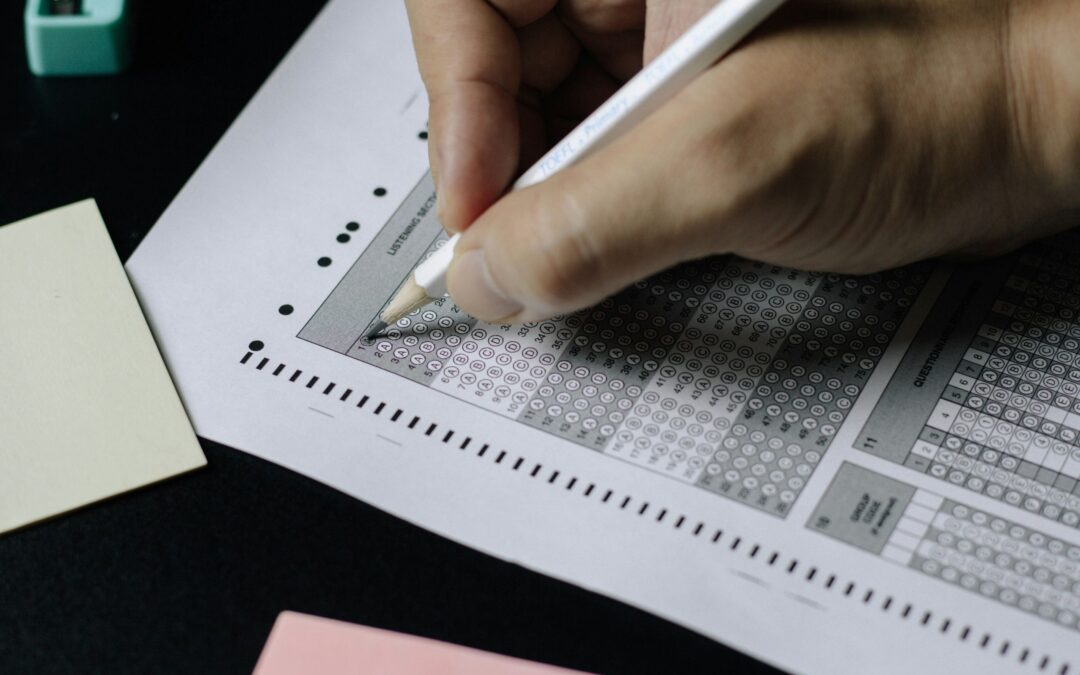
Minnesota should take the recent offer of the National Assessment Governing Board and opt into newly announced, federally funded expanded high school tests.
Last week, the National Assessment Governing Board announced that there would be key expansions to the National Assessment of Educational Progress (NAEP) assessment. Currently, state-level NAEP data is only available for fourth and eighth grade reading and mathematics. The new testing schedule now would publish state-level results in 12th grade math and reading, eighth and 12th grade civics and eighth grade science.
This move quiets speculation on the question of further federal leadership in national K-12 testing. Although Secretary McMahon vowed to protect the NAEP, last year the department laid off testing experts and canceled several optional tests to save money. It now appears that the move was a temporary step, not the harbinger of a program gut.
Publishing state-level results gives state-based policymakers key, measurable pieces of actionable data that closely lead to reform measures.
There’s a strong consensus that such detailed data is needed. A recent Bipartisan Policy Center report called for called for more state-level data in math, reading, and civics and a faster turnaround between the assessment and the release of the results. Education writer Dale Chu said that the Governing Board’s vote “suggests an acknowledgment that standardized testing, and comparable data across states, still matters.”
Without national assessments, states cannot easily compare their education programs to one another — which is important for inter-state competition and intra-state accountability. Some states, like Virginia, have significant “honesty gaps”, or scenarios where locally made state test proficiency results are much higher than national test results.
Critics of standardized tests often fear that students are spending too much time on standardized testing and that test results inaccurately report actual learning. The critique of standardized tests, however, has lessened in recent years as the tests themselves improved. Standardized tests aren’t perfect, but they’re the simplest measure to easily communicate learning information to teachers, parents, and policymakers, combat grade inflation, and hold schools and states accountable.
With new expanded and data-updated NAEP tests hitting classrooms as early as 2028, Minnesota has the chance to overcome a key data gap. Currently, Minnesota only administers the reading and mathematics Minnesota Comprehensive Assessment (MCA) yearly in grades 3-8, with one reading test given in grade 10 and a mathematics test in grade 11. Now, Minnesota will gain the chance to receive state-level data that can give a fuller picture on high school seniors. This would help close a significant current information gap on how Minnesota students progress through high school and how Minnesota seniors compare to other states. (Plus, Minnesota would be able to see additional civics and science data.)
But there’s a catch. Minnesota’s Department of Education and Commissioner of Education Willie Jett has to volunteer to receive the state-level results by January 2027. A recent press release noted that “NAEP covers all costs associated with preparation, administration, scoring, and reporting,” making this federally-funded opt-in an easy “yes” for Minnesota’s administrators.
This state has struggled in the past to opt into popular, beneficial federal education programs. This choice can, and should, be different. Minnesota should take this opportunity to further education achievement for all students on the federal government’s dime.