
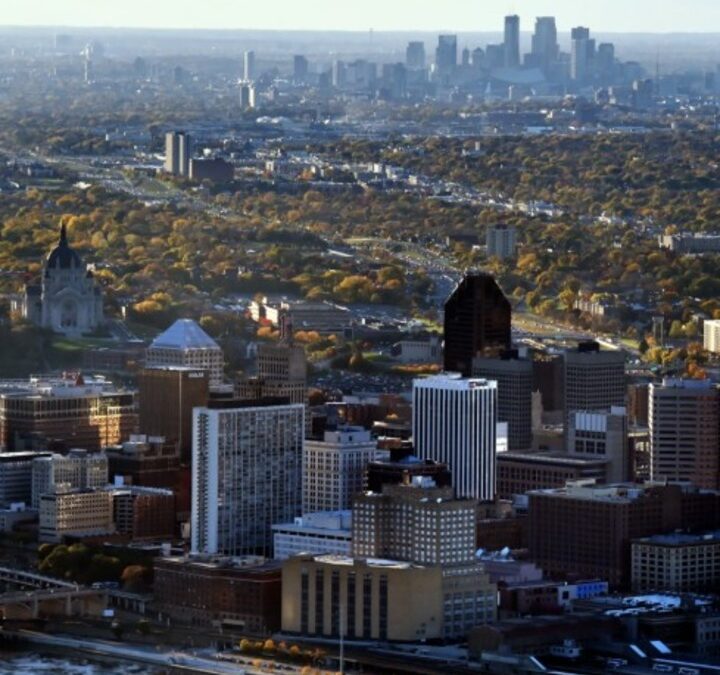
We at Center of the American Experiment have long tracked the collapse of commercial real estate values in Minneapolis and St. Paul, the resulting squeeze on city budgets, and the consequent hikes in residential property taxes to plug the gaps.
A common reply is that all major American cities are facing this problem:
There is some truth to this, but new data show that the problem is especially bad in the Twin Cities. KSTP reports that:
…the Twin Cities metro has the nation’s highest commercial property distress rate, raising new questions about the impact on metro homeowners.
New commercial real estate data from CRED iQ shows the Twin Cities has the highest distressed property rate of any U.S. metro, naming Minneapolis, St. Paul and Bloomington. In Bloomington, City Assessor Tim Bulger said the city does not have the same commercial real estate problems as Minneapolis or St. Paul.
Growth does appear to be stagnant right now though.
Of course, growth that is stagnant isn’t growth at all.
This is a point I make about a range of issues on a regular basis. If you go anywhere in America, you will be told that housing, for example, is expensive and perhaps this is true, nationally, relative to incomes or some past level. But, at the state level, what we are interested in is not answering “Why is housing expensive?” but answering “Why is housing more expensive in Minnesota?”
The same applies to urban commercial real estate. The appropriate question at the state level is not “Why is commercial real estate tanking?” so much as “Why is commercial real estate tanking so much harder in the Twin Cities?”