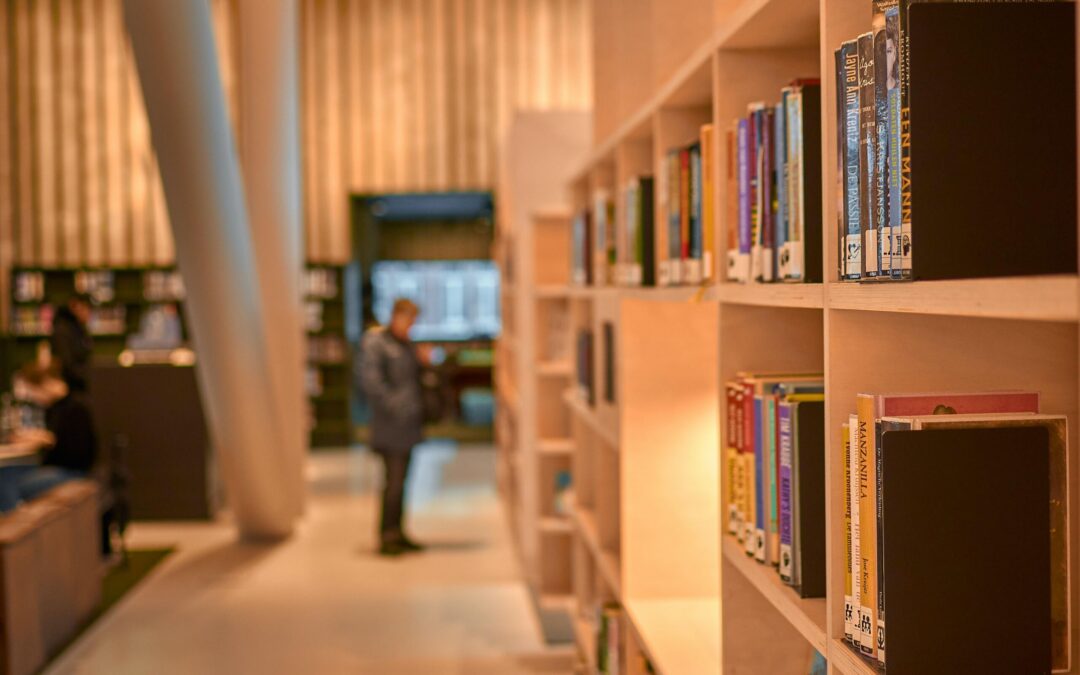
As a teenager, I spent a summer volunteering at my local library. I biked the 2.5 miles from my house with an empty backpack in tow, ready to spend hours reshelving novels and mysteries and entering new arrivals into the circulation system. At the end of the day, I returned home with stories from new worlds. But I’d never be able to read every book, and because no library can hold everything, behind every shelf I helped keep organized was a series of decisions.
Each fall, one kind of decision moves to the center of a national conversation during “Banned Books Week,” which has been organized by the American Library Association (ALA) for the past 44 years.
Definitions matter
The ALA, a founding member of the Banned Books Week Coalition, says the week was launched in 1982 “in response to a sudden surge in the number of book challenges in libraries, schools, and bookstores.”
ALA’s Office for Intellectual Freedom (OIF) reported 4,235 unique titles challenged in 2025 and thousands of books “banned” from libraries. A “challenge,” according to ALA, is a complaint, and a “ban” means a book was removed from a library. PEN America, a major partner of Banned Books Week and the self-described protector of “free expression” in the United States, defines a school book ban as
any action taken against a book based on its content and as a result of parent or community challenges, administrative decisions, or in response to direct or threatened action by lawmakers or other government officials, that leads to a previously accessible book being either completely removed from availability to students, or where access to a book is restricted or diminished. [Emphasis added.]
In everyday usage, however, “ban” is more likely to evoke Fahrenheit 451 and the illegality and burning of books.
Banning vs. curating
Even if one accepts the definitions provided by the ALA and PEN America, a report by Jay Greene, Max Eden, and Madison Marino for the Educational Freedom Institute found that most “banned books” are still available.
But even those that aren’t, for reasons ranging from sexually explicit material to age inappropriateness to parent dissatisfaction that may or may not be justified, the attention on their absence from shelves or their temporary removal misses an important point in this whole debate: While we are talking about the books coming off the shelf, there is something to be said about the books that never make it to the shelf to begin with.
Libraries should serve as bastions of intellectual freedom, but that is undermined when library neutrality and viewpoint diversity in collections are missing. The books already in the library build one narrative, perhaps reflective of the community’s values, yet the books that are not there tell an equally compelling story.
After surveying the library catalogs of 35 of the largest public school districts representing over 4,600 individual schools in eight red states and six blue states, James Fishback with The Free Press found that what’s going on in school libraries “isn’t so much a problem of banned books” but that “kids are often exposed to only one side of the story.”
Surveying the available online library catalogs of the Anoka-Hennepin school district — the largest school district in Minnesota — reveals some interesting finds on viewpoint balance. (This was not a scientific, controlled study, but a compelling comparison nonetheless.)
As of October 27, 2026, the district houses numerous books by Ibram X. Kendi, including at least 60 copies of Stamped: Racism, Antiracism, and You, five copies of How to be an Antiracist, two copies of How to be a (Young) Antiracist, and five copies of Stamped From the Beginning. Not a single copy of a book that challenges Kendi’s “antiracist” ideas, Woke Racism by John McWhorter, is offered. White Fragility by Robin DiAngelo has several available copies, but no copies listed of White Guilt by Shelby Steele.
A search for books in support of transgenderism generates dozens of available books, but not any that are critical of trans theory or concerned about the sudden surge in transgender identification among teenagers, such as Irreversible Damage by Abigail Shrier or Trans by Helen Joyce. A handful of copies of The 1619 Project by Nikole Hannah-Jones are available, but 1620: A Critical Response to the 1619 Project by Peter Wood is not. The Communist Manifesto by Karl Marx is available, but Capitalism and Freedom by Milton Friedman is not. Or any books by Friedman, for that matter. No Friedrich Hayek. It was heartening to see that Thomas Sowell’s Marxism: Philosophy and Economics is available.
Do school libraries have endless funds to purchase every book? Of course not. School library budgets only stretch so far, and library shelves have limited capacity. But students should be able to access contrasting viewpoints, continues Fishback. “Should libraries carry books that peddle progressive ideas? Absolutely, but only if they carry books that advocate for conservative ones too, so our young minds can benefit from the full spectrum of opinions.”
A recent piece from Fair For All points out that this “more insidious form of censorship” often happens earlier, “when the people choosing books decide certain perspectives simply don’t belong in libraries.” And don’t forget, Fair For All continues, the library wholesalers (whose selected materials end up, in practice, “inevitably skewed toward the progressive viewpoint”), the publishers themselves “eager to satisfy their progressive impulses,” and the professional book reviewers and journals “who are also eager to support identity-based causes.”
Because of these reasons, “just trust the professionals” isn’t enough. This is why Minnesota school districts have policies for reconsidering library materials. It is also why Minnesota’s book banning prohibition allows exceptions for “legitimate pedagogical concerns, including but not limited to the appropriateness of potentially sensitive topics for the library’s intended audience.”
Every library says no to books — American Experiment has experienced this with its “Star of the North” book on Minnesota history. The more honest question is not whether anyone should ever say no to a book, but rather who decides and using what standard? Library shelves will always be the result of someone’s judgment. A library that can explain why a book is there, or why it isn’t, will not only create more transparency and community trust but also, hopefully, more library neutrality.
____________________