
What could go wrong?
“Money out of politics, money in your pocket and Medicare for All!” That slogan has so far worked for Michigan U.S. Senate candidate Abdul El-Sayed. Everyone knows it by name, but few can say what it costs or what Medicare for All (M4A) does. Most associate the idea with Bernie Sanders, the bill’s 85-year-old Senate champion. If such legislation ever passes, however, it will be shaped by a younger generation of progressives who now defer to the electoral safety of Sanders’ quixotic plan. Look to Minnesota.
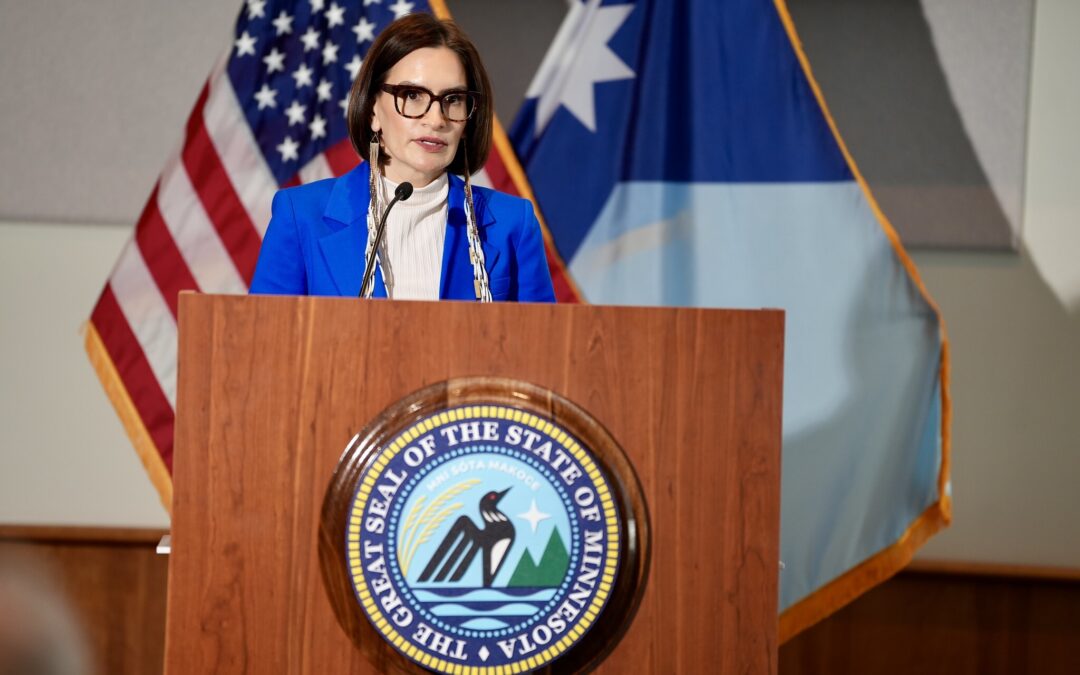
Peggy Flanagan represents that generation. Minnesota’s lieutenant governor is running to replace retiring U.S. Senator Tina Smith. In 2017, while both served with me in the Minnesota House, Flanagan and Ilhan Omar co-authored HF 358, the Minnesota Health Plan. The bill would create a statewide single-payer system covering all residents for essentially all care—including dental, vision, hearing, mental health, substance-use treatment, nursing-home and assisted-living care, adult day care, hospice, and prescription drugs—with no deductibles or copays for covered services. Unlike federal M4A proposals, it places both benefit design and the power to raise the revenue that funds them in the hands of an unelected 15-member Minnesota Health Board that would set its own tax rates free of ordinary legislative control and set all payment rates and benefits for whatever they deem to be “necessary” care. The plan is still intact and promoted in Minnesota, and remains the gold standard for the new left nationally.
As a Senate candidate, Flanagan has made Medicare for All a central priority. She told the Star Tribune that she did not begin the campaign supporting the idea, but that conversations with voters convinced her she was “not up for merely nibbling around the edges” and that “Medicare for All is the way to go.”
The 2017 Minnesota bill is more far-reaching than the federal measures associated with Sanders and Representative Pramila Jayapal. Its radical difference is structural: an appointed board, not the Legislature, would decide benefits, provider payments, and the taxes needed to pay for them. The financing mechanism makes this plain. This is not “free” health care. HF 358 spells it out:
Sec. 2.[62W.20] REVENUE SOURCES.
The Minnesota Health Board shall:…
(2) develop an equitable and affordable premium structure based on income, including
unearned income, and a business health tax based on payroll;(3) in consultation with the Department of Revenue, develop an efficient means of
collecting premiums and the business health tax;
Advocates state that “the Legislature and Governor would have no authority over the MHP revenues,” precisely to stop elected officials from using the money for other budget needs or “starving the health plan of needed funds.” In practice, the board would set its own budget and taxes first; the Legislature would then operate with whatever remains. Advocates say “most people will pay less,” while higher earners and businesses would pay substantially more. The legislation’s use of “selected” rather than “appointed” members is designed to avoid legislative confirmation. Moreover, legislators have no say in the benefits, premiums, taxes or management of the plan. By design, all they get is a look at a report:
“the board shall submit to the governor and the legislature a report on the premium and business health tax structure established to finance the Minnesota Health Plan.”
I’m sorry….what?
Coverage would extend to essentially all medical costs for all residents, including undocumented immigrants. A new unelected board determines your tax, and premium paid to an entity that determines your “necessary” benefits. If you guess that something should probably prevent legislators from exporting taxing authority and health care rationing to an unelected board, you are not alone.
University of St. Thomas economist John Spry examined the proposal and concluded it conflicts with the Minnesota Constitution. Article 10, Section 1 states that “the power of taxation shall never be surrendered, suspended or contracted away.” Article 4, Section 18 requires that bills for raising revenue originate in the House. An unelected board that originates and sets unlimited taxes without a legislative vote would, in Spry’s view, violate both provisions and the principle that those who levy taxes remain accountable at the ballot box. The design would also unbalance the state budget by intention: the health board determines its revenue needs first, leaving elected branches with the residual.
The missing M4A report
Minnesotans have already spent nearly $3 million on a required 10-year cost-benefit analysis of a Minnesota single-payer system. A 2023 statute directed the Department of Health to deliver the study by January 15, 2026. As of mid-October the findings have not been released. The delay has become an issue in the Senate race.
Minnesota Democrats chose Flanagan over the more centrist Rep. Angie Craig in a contested primary. The Minnesota Star Tribune identified Medicare for All as a defining difference between them. Voters still lack answers on total cost, tax changes, provider payment rates, and the fate of the roughly 73 percent of private-sector employees who currently receive coverage through their employers.
Move past slogans to see what this generation of legislators would pass to eliminate private health insurance. Examine Ilhan Omar and Peggy Flanagan’s 2017 Minnesota Health Plan. As statehouse freshmen, they put their intentions in plain language long before experience taught them to replace that clarity with a wink and a nod.