
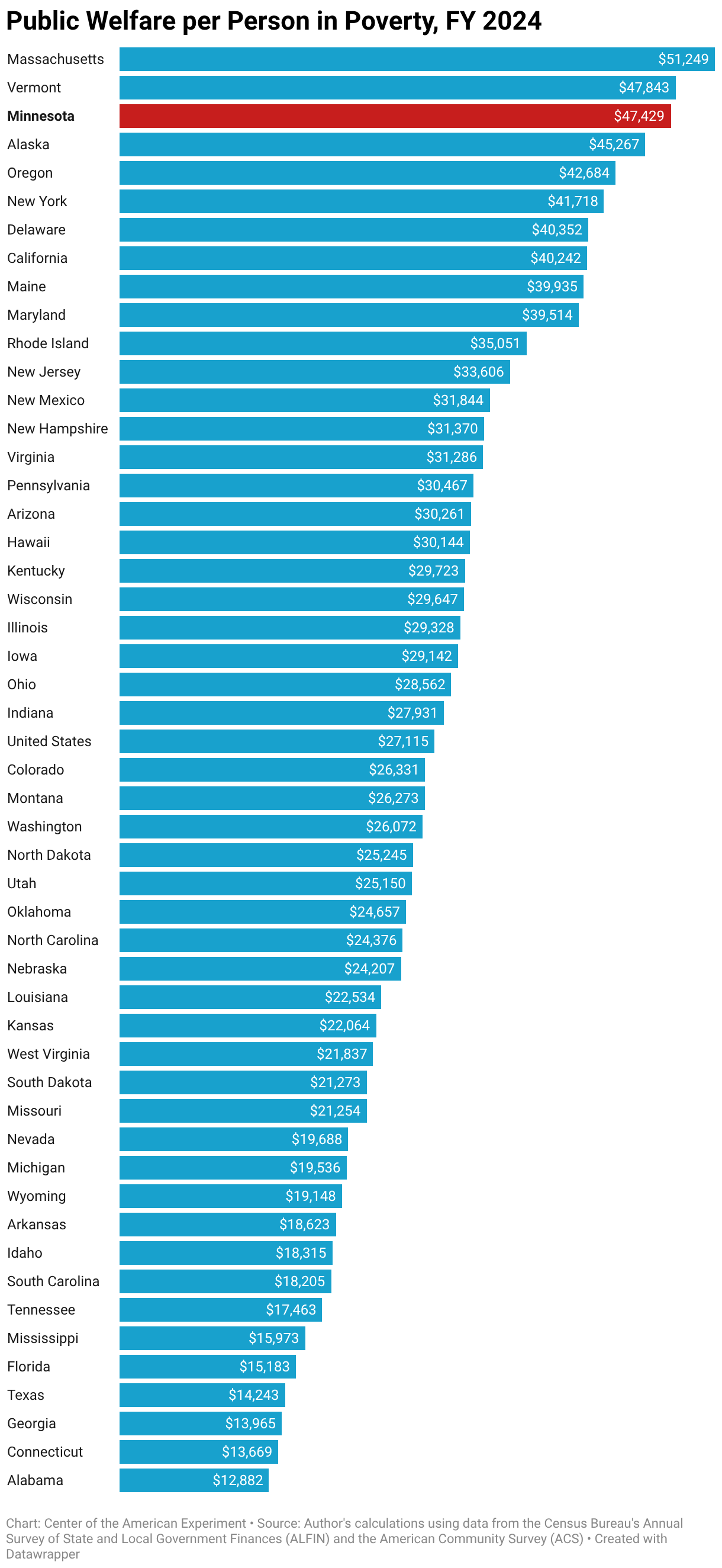
Minnesota has one of the most generous welfare systems nationwide. That trend persisted in the 2024 fiscal year, as recently released Census Bureau data show that, after adjusting for the number of people living in poverty, Minnesota spent more on welfare programs than 47 other states ($47,429 per person).
Even when casting a wider net, Minnesota spent $20,141 per person living below twice the Federal Poverty Level, ranking fourth-highest among the 50 states. Minnesota outpaced the national average ($12,041) by 40 percent.
Every year, the U.S. Census Bureau updates its Annual Survey of State and Local Government Finances. This is the country’s only comprehensive accounting of state and local government spending, inclusive of federal dollars. The Bureau breaks down spending by category, offering an opportunity to analyze which public services states prioritize over others.
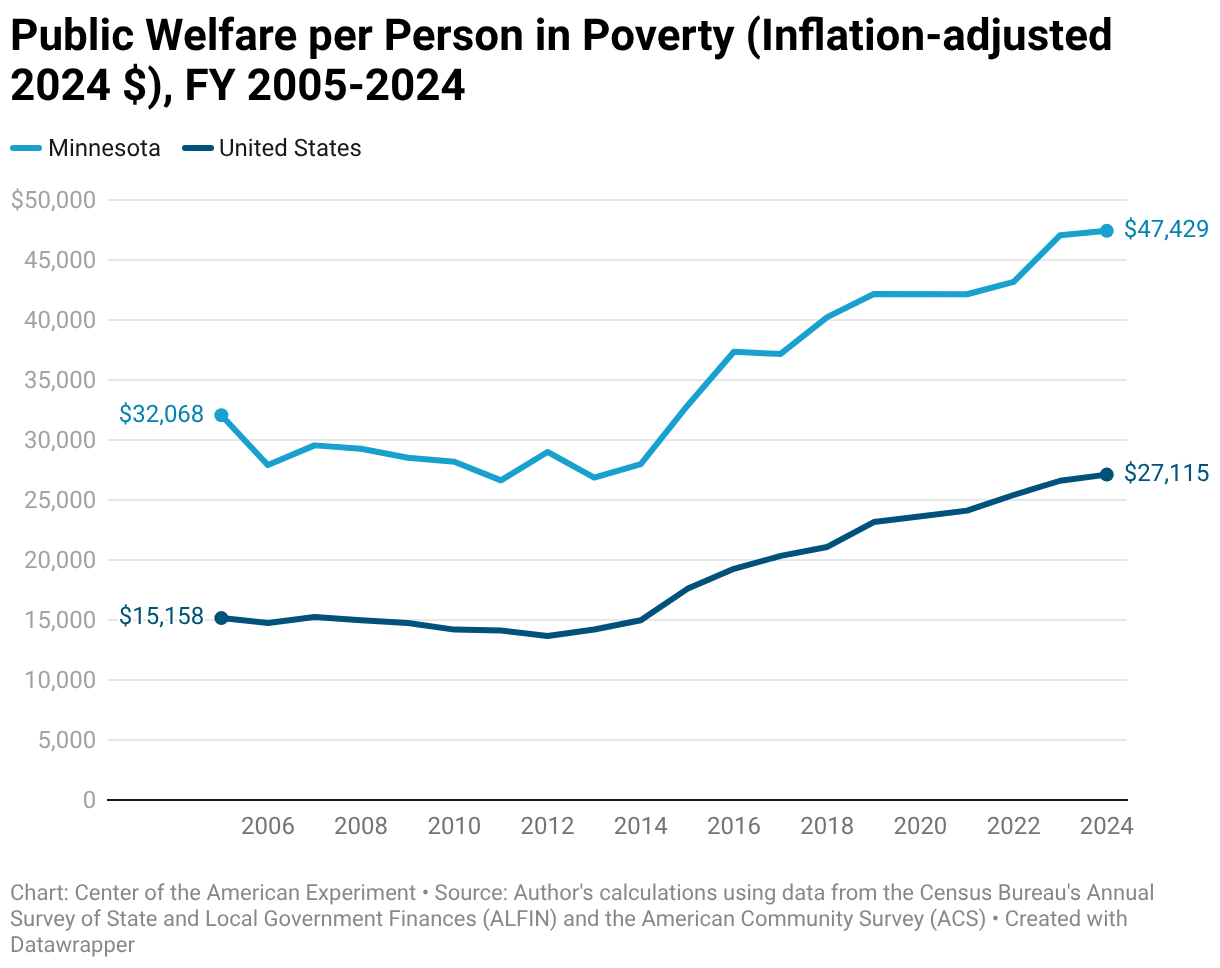
Extending that data back to 2005, the first year the U.S. Census Bureau officially launched the American Community Survey (ACS)— now a standard for tracking poverty across states — shows Minnesota consistently surpassing the national average. In 2005, Minnesota spent more than double the national average. This gap has shrunk (in percent terms). Still, in 2024, Minnesota spent over $20,000 more than the U.S. average, or three-quarters more.
According to the 2024 update, Minnesota spent $82.1 billion on general government activities, including means-tested welfare programs such as Medicaid, cash assistance, and childcare; roads; education programs; police and fire protection; and other healthcare programs. This came down to $14,176 per resident — the 16th-highest spending level nationwide.
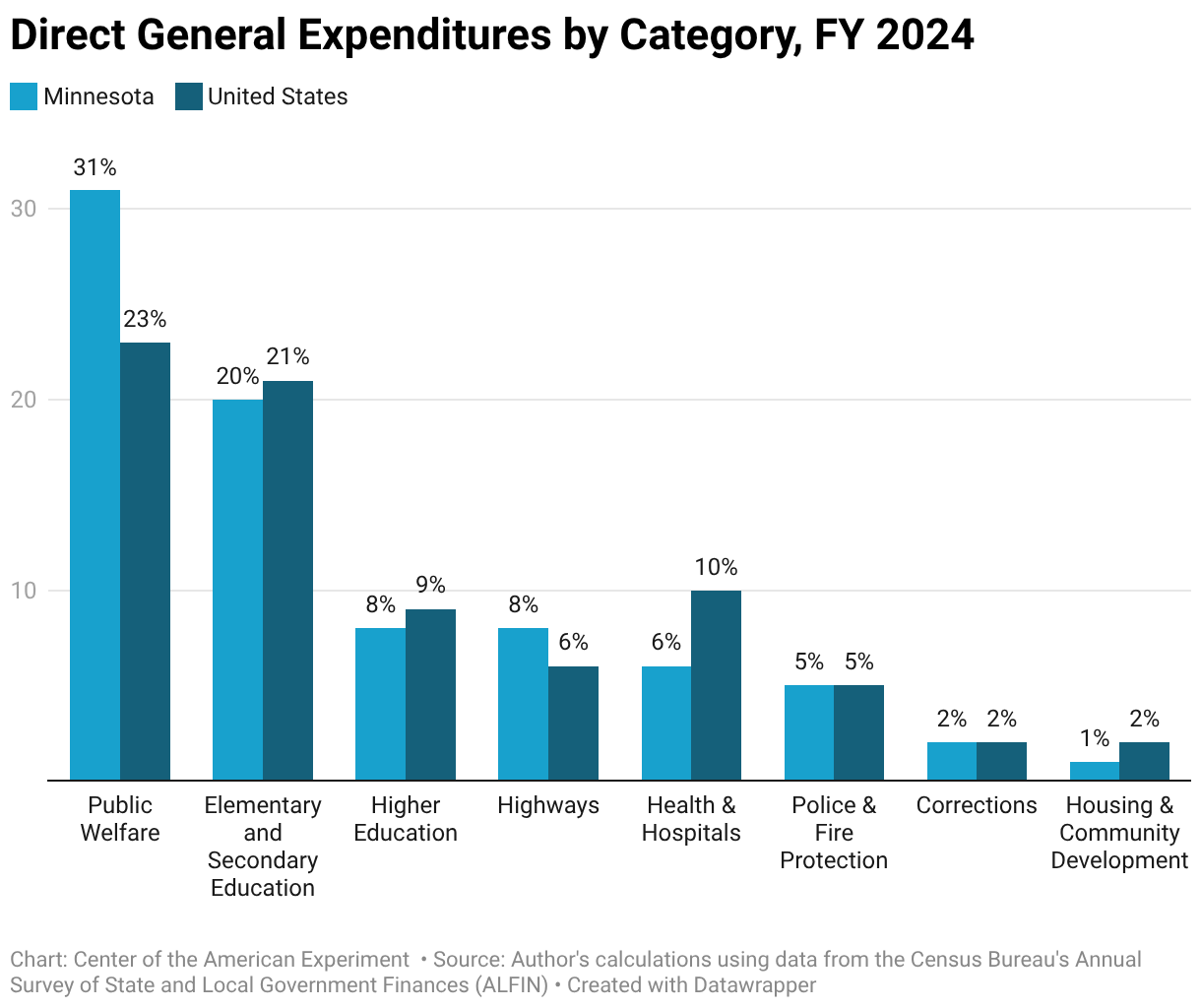
Both nationally and in Minnesota, public welfare was the top spending component. For every $100 spent, Minnesota allocated $31 to public welfare programs, compared to just $20 for elementary and secondary education. Nationally, however, public welfare surpassed elementary and secondary education by just two percentage points.
Minnesota, in fact, spent more on public welfare than it spent on its entire education system, including colleges and universities. Such was not the case nationally, suggesting that Minnesota could be prioritizing means-tested programs, potentially at the detriment of core public services.
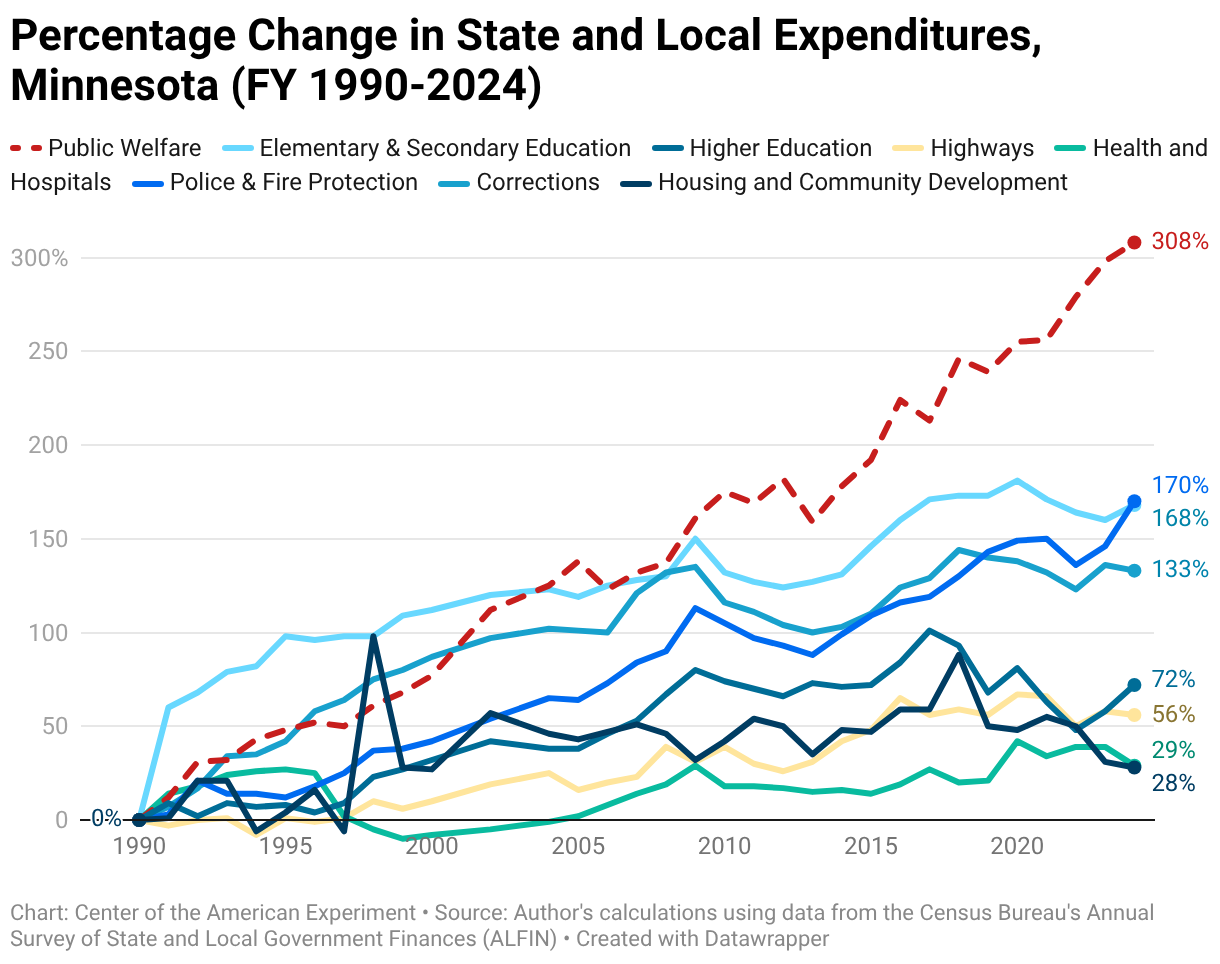
Indeed, public welfare has been by far the state’s fastest-growing expenditure category, more than quadrupling since 1990. Elementary and Secondary Education has grown by 168 percent during the same period — slightly over half as much.
How this plays into the state budget picture
The gradual shift to prioritizing means-tested programs is also apparent in state data.
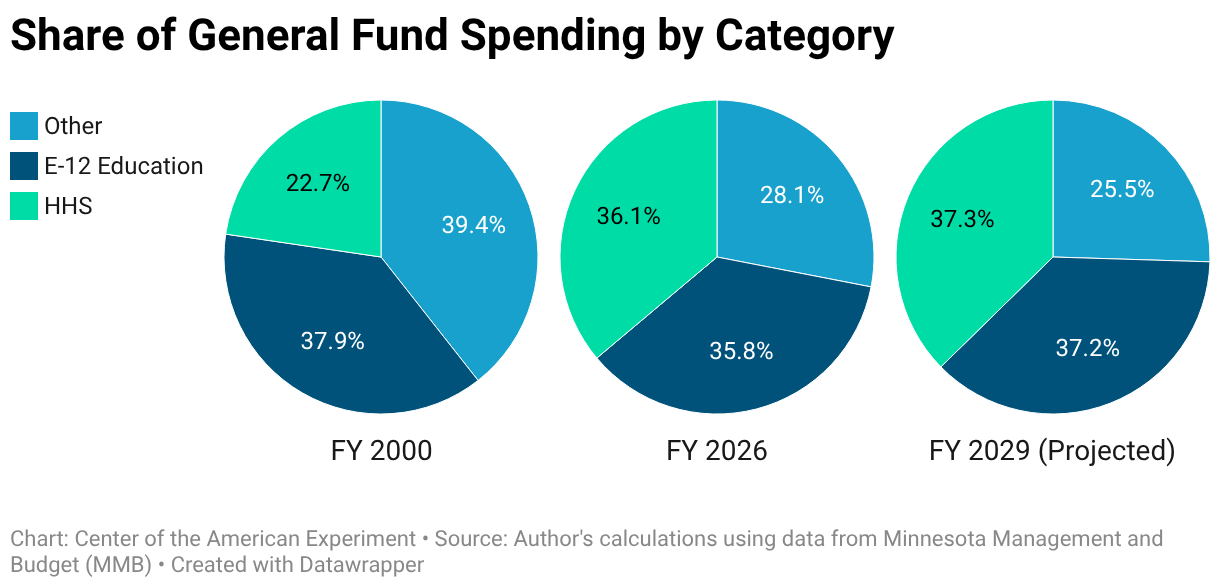
For every $100 spent in 2000, the Minnesota state government allocated $23 to Health and Human Services (HHS) — the umbrella category for means-tested programs such as Medicaid, cash and child care assistance. E-12 education got the lion’s share of the state budget (nearly $39 for every $100). With a gradual but consistent shift in state spending, HHS overtook E-12 education for the first time in 2026. If current trends persist, this will be repeated in 2029, and likely every year after.
The state budget is heading for a crash, and HHS expansion, which is especially evident in Census Bureau data, is a crucial part of the story. What remains to be seen is how lawmakers will respond.