
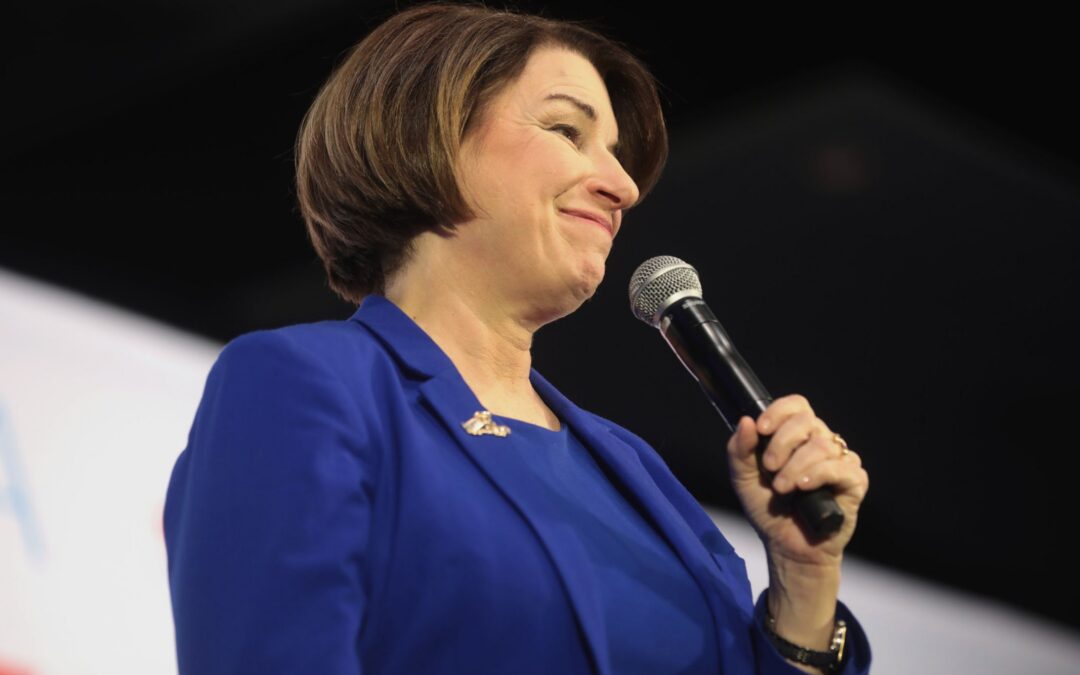
Photo: Gage Skidmore (CC BY-SA 2.0) (https://flic.kr/p/2ivpbJD)
Amy Klobuchar wants credit for softening the medical device tax. She should start by explaining why she cast one of the 60 votes required to pass Obamacare—the bill that created the tax. While some states benefited from a parade of special deals that accompanied their senator’s vote, Minnesota got clobbered with new taxes and mandates. Medicaid exploded to the point one-in-five Minnesotans (one-in-three kids) now qualify and $9 billion is gone forever to fund fraud.
In a recent debate, the Minnesota senator cast herself as a protector of the state’s medical technology industry, citing later efforts to reduce or suspend the 2.3 percent excise tax Obamacare imposed on devices. The performance was a dance lesson for a clumsy version of the old Potomac two-step : claim ownership of the cleanup while simply pretending she did not cast the deciding vote to pass it. Minnesota’s device makers—Medtronic, Boston Scientific, St. Jude, and scores of smaller firms—ate it, and then had to thank her for trying to lower it.
The $200 million Medtronic Tax
The tax applied to revenue regardless of profit. It raised the price of products used in operating rooms and clinics and made Minnesota a less attractive place to invent and manufacture them. Medtronic, the company that began in a Minneapolis garage and grew into a global leader, later inverted and became an Ireland-based corporation. Tax considerations, including the device levy and the broader U.S. corporate rate, were material to that decision. When a firm founded in a Twin Cities garage concludes that remaining headquartered in America no longer makes economic sense, the senators who voted for the underlying policy can take the blame. Estimates put the annual hit to Medtronic (apart from all the other Minnesota device makers) at $150–200 million a year. Soon after, the company moved its legal headquarters from Minnesota to Ireland, citing the unfavorable tax structure in the United States.
Other senators demanded changes to get a yes vote.
The same Senate bill that produced the device tax was also famous for the accommodations required to reach 60 votes. Ben Nelson of Nebraska extracted permanent federal funding for his state’s share of the Medicaid expansion, worth roughly $100 million over a decade. Mary Landrieu of Louisiana secured the Louisiana Purchase—hundreds of millions in extra Medicaid money for her state. Other senators obtained narrower but still valuable favors: language that reduced or eliminated the new insurer fee for Blue Cross Blue Shield of Michigan and for certain Nebraska companies, including Mutual of Omaha; a last-minute delay and softening of the “Cadillac tax” on high-cost health plans that primarily benefited unions with generous benefits; and a $100 million provision linked to Chris Dodd for a University of Connecticut medical center. These demands were unseemly. Minnesota had a real harm that needed to be fixed, and our senators didn’t bother to ask to have it fixed before voting yes.
No state stood to lose more than Minnesota by Obamacare. It wasn’t just device makers that stood to lose. We had the undisputed best quality care in the world, right here. We had some of the lowest numbers of uninsured. We had a high-risk pool for people with preexisting conditions. We had programs to help cover low-income families who were trapped between Medicaid and affordable insurance. All that got wiped out by Obamacare. We even had a “sick tax” to help pay for it all. Shocker: that’s still here. We had reached all the goals of Obamacare already so we had nowhere to go but down.
Pay more, get less
Now the patients who pay into the system pay more and more to get less and less. We couldn’t keep our doctor we liked, or the plan we liked. Costs went through the roof. We lost more than any other state and got almost nothing for it (unless you like the millions in Medicaid redeployed by fraudsters). Why did we do this? Oh yes, to lower the uninsured rate. Our uninsured rates before Obamacare were always near the best in the country. Now they are heading back to record levels, (worsening compared to other states).

Klobuchar’s later votes to delay or suspend the device tax are real. They are also the political equivalent of setting a house on fire and then volunteering to help put it out. Minnesota’s device industries was already one of the most important concentrations of medical innovation in the country. The tax treated that concentration as an ATM machine. Companies recalculated where to invest and headquarter. Some of those calculations ended with the decision to leave.
Klobuchar now seeks recognition for mitigating one of the costs. She voted for the bill that imposed the tax and for the broader package of targeted deals that made passage possible, watched Minnesota companies absorb the damage, and only later joined the effort to limit the harm. That is not effective advocacy. It is a reminder that the incentives that produced the original legislation still reward lawmakers for claiming credit on both sides of the ledger while patients pay more and more to get less and less, while fraudsters rip them off.