
In its famous 1973 cover story on Minnesota – “A State That Works” -TIME magazine reported that “Politics is almost unnaturally clean” here; “no patronage, virtually no corruption.” The author may have had the gubernatorial election of 1962 in mind when he wrote that.
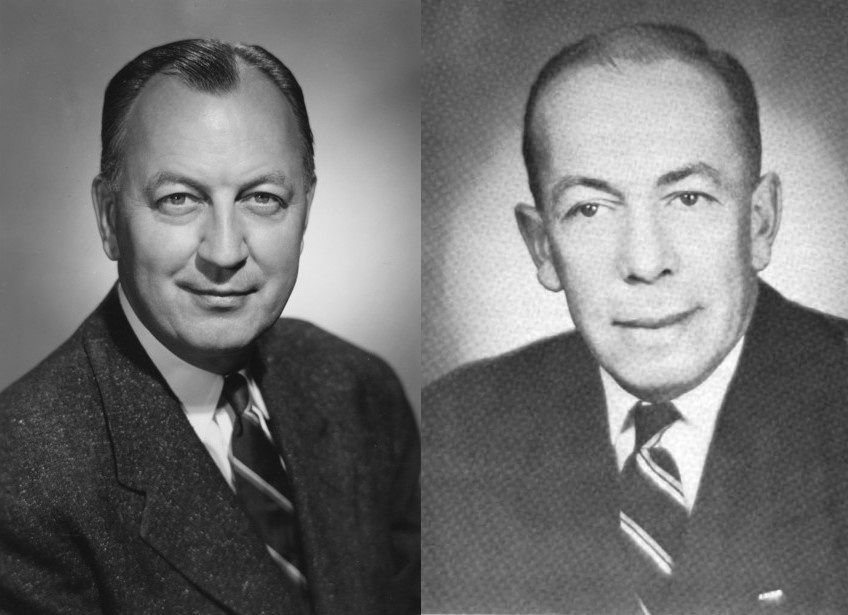
That year, Republican governor Elmer Andersen was running for reelection against his DFL challenger, Karl Rolvaag. It was a tight race. On October 12, the Minneapolis Tribune’s poll gave Anderson 48 percent and Rolvaag 47 with five percent undecided. Then came a classic “October surprise.”
As David Lebedoff wrote in “The 21st Ballot: A Political Party Struggle in Minnesota:”
Eleven days later, a highway materials inspector submitted a report to the Bureau of Public Roads in Washington. The inspector was a brother of Michael O’Donnell, campaign aide to Karl Rolvaag. His report claimed that there had been irregular construction practices on a thirteen and one-half mile stretch of Interstate Highway 35, between the towns of Hinckley and Askov, in the northeastern part of the state. Specifically, it charged that concrete had been poured during temperatures far below minimum standards, and that other specifications had not been met, with possible impairment of traffic safety. Within a few days, investigators had arrived from Washington and the matter was being discussed on the front pages of almost every newspaper in the state. It was suggested that highway construction had been recklessly speeded up so that the road would be ready for its planned November 2 dedication, four days before the election.
The most remarkable thing about the Highway 35 issue is that it attracted so much attention. In Massachusetts, it would have gone unnoticed. Perhaps Minnesota’s reaction is a tribute to its politics. The state is unused to charges of political corruption. There is a strong tradition of honesty in office. Minnesotans lack the eastern tolerance of political opportunism…In Minnesota one does not have to drill very deep to hit the geyser of effective public outrage.
The election was held on November 6, 1962, but the result was not confirmed until March 1963, when it emerged that Rolvaag had defeated Andersen by 91 votes out of over 1.2 million cast. “[T]he effect of the [Highway 35] controversy on such a close election was not hard to guess,” Lebedoff concluded.
Given some recent electoral results in our state, it is incredible to think that, once upon a time, Minnesota was a state where such a minor scandal could decide the outcome of a gubernatorial election. “The past is a foreign country,” the novelist L. P. Hartley wrote; “they do things differently there.”