
Two posts from a couple years back in Powerline sounded the alarm on the push to replace gas heating in Minnesota with heat pumps. The author was no less than John Hinderaker, the President of Center of the American Experiment.
The initial post on March 19, 2024 of “Next Up, Heat Pumps” first alerted:
“If you’ve wondered how liberals expect you to heat your house after they have outlawed fossil fuels, the short answer is heat pumps. Heat pumps have joined ‘batteries’ as the all-purpose ‘green’ solution. But in reality, they are no solution at all.”
The subsequent post on September 19, 2024 of “Here Come the Heat Pumps?” then warned:
“Liberals have every intention of depriving you of the option of heating your home (or cooking your food) with fossil fuels. Rather, you will be forced to use absurdly inefficient technologies like heat pumps, whether you like it or not, and no matter how much the cost degrades your standard of living. Consider yourself warned.”
Heat pump law
This is a prescient warning, as Xcel Energy are currently spending significant sums of money on research and development (R&D), under the auspices of the “Natural Gas Innovation Act” (NGIA). As the Minnesota Public Utilities Commission (PUC) describes it:
“The NGIA and its innovation plans enable gas utilities to begin testing methods to reduce their emissions, and in some cases, transfer their business away from natural gas entirely.”
The relevant Minnesota Statute is 216B.2427 entitled “Natural Gas Utility Innovation Plans.” The two most relevant provisions from this are:
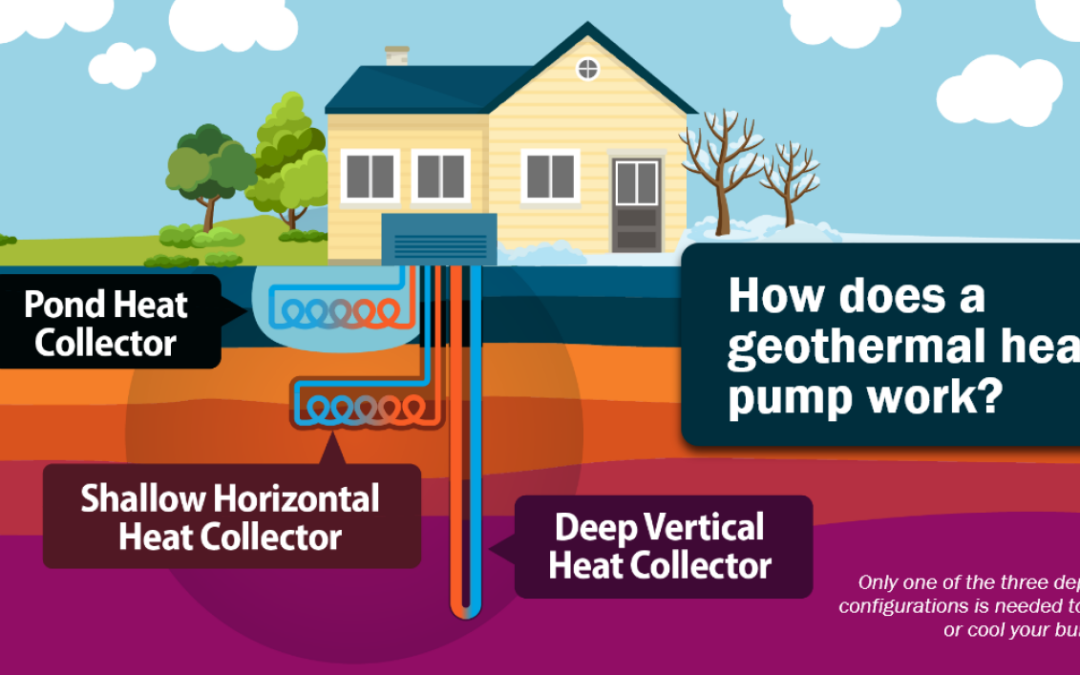
“Subdivision 1. Definitions. (s) “Thermal energy network” means a project that provides heating and cooling to multiple buildings connected via underground piping containing fluids that, in concert with heat pumps, exchange thermal energy from the earth, underground or surface waters, wastewater, or other heat sources.”
“Subd. 8. Electric cold climate air-source heat pumps. (a) The first innovation plan filed under this section by a utility with more than 800,000 customers must include a pilot program that facilitates deep energy retrofits and the installation of cold climate electric air-source heat pumps in existing residential homes that have natural gas heating systems.”
Heat pump regulation
Xcel filed their first NGIA report with the PUC on June 15, 2026, based on Xcel’s original NGIA plan filed with the PUC on December 15, 2023, and subsequently approved by the PUC on May 16, 2025. The PUC filed a “Notice of Comment Period” on June 23, 2026, that closes on August 19, 2026. All of these documents, and more, can be found under PUC eDocket 23-518.
One key highlight from the 2026 Xcel report to the PUC is that:
“The Company is transitioning the name of this pilot from ‘Community Ground Source Heat Pump’ to ‘Utility Thermal Energy Network’ (UTEN) to match the industry trend[.] … At a high level, the Company hopes to learn more about whether this technology can be used to decarbonize our gas utility system, cost effectively, at scale.”
Another key highlight from that report is:
“Locating an [Industrial Heat Pump Field Trial] customer has been challenging for several reasons. First, because, even if an IHP is a good technical solution that supports decarbonization, in many instances the payback period and/or increased electric charges are not financially beneficial to the customer.”
Heat pump science
So what are heat pumps? The US Energy Information Administration (EIA) defines these as:
“Heating and/or cooling equipment that, during the heating season, draws heat into a building from outside and, during the cooling season, ejects heat from the building to the outside.”
The US Department of Energy (DOE) adds to this by noting:
“In moderate climates, heat pumps can be an energy-efficient alternative to furnaces and air conditioners. Several types of heat pumps are available, including air-source; geothermal; ductless, mini-split; and absorption heat pumps.”
Regarding geothermal heat pumps, in particular, EIA explains that:
“For much of the United States, the soil temperature is usually warmer than the air temperature in winter and cooler than in summer. Geothermal heat pumps use the earth’s steady temperature to heat and cool buildings. … Geothermal heat pumps are generally more expensive ($2,000-$5,000) to install than outside air heat pumps.”
Heat pump economics
The economics, from the vantage point of one company in the heat pumps business, Abe Heating & Cooling, is:
“A geothermal system is much more expensive to install than a gas furnace. A horizontal loop [for an air source heat pump] is less expensive than a vertical loop [for a geothermal heat pump], so if space allows, a horizontal loop is preferable. Once the system is in place, however, there is no need to purchase fuel for heating or cooling.”
Another company, but in the broader heating business, Bryant Heating & Cooling Systems, has a similar take of:
“Also called ground-source heat pumps, geothermal systems…require extensive ground loop installation (trenching or drilling), which drives up the upfront cost. The average installation cost for a geothermal heat pump system typically ranges from $15,000 to $30,000. That said, the significant long-term energy savings, exceptional system longevity, and potential tax credits make geothermal a smart long-term investment.”
Regarding potential tax credits, the Minnesota Department of Commerce (DOC) administers a “Residential Heat Pump Rebate Program” and “Home Electrification and Appliance Rebate program (HEAR),” noting:
“Technologies that are not eligible for the state rebate program but, allowed under HEAR, include: Ground source heat pumps. … HEAR will provide instant rebates to income-qualified households to help install new efficient electric equipment and supporting upgrades[.].” … The “Maximum Total Rebate per Household” being between “$7,000 and $14,000.”
Heat pump politics
A ‘liberal’ position is provided by the Center for Energy and Environment (CEE) in their January 9, 2024 post calling for “The need for natural gas decarbonization in Minnesota.” In this, CEE, on the one hand, acknowledge:
“Despite advances in technology, electric heating alternatives like cold-climate heat pumps still lose efficiency and the ability to produce the same quantity of heat at very low temperatures, meaning most households in Minnesota will need a secondary heating system.”
Yet, on the other hand, CEE still advocate:
“By setting an example of how to decarbonize natural gas safely and equitably in a cold state that relies heavily on the resource, Minnesota would continue its climate leadership and encourage other midwestern and northern states to do the same.”
A ‘conservative’ position is provided by the Competitive Enterprise Institute (CEI) in their March 18, 2025 post celebrating that “Trump cancels Biden’s heat pump crisis.” As CEI report:
“Heat pumps are the electric vehicles of home appliances. Both are grossly overhyped by environmental activists for their claimed climate benefits[.]”
Not only are benefits grossly overhyped, but costs are deceptively downplayed. As CEI note:
“While a heat pump’s cooling capacity is comparable to that of a standalone air conditioner, its heating capacity is definitely not on par with a gas furnace. Thus, many heat pump owners would still need to rely heavily on a backup source of heat…to get through the winter, especially in northern states. Keep in mind, natural gas is several times cheaper than electricity on a per unit energy basis, thus sticking with a separate natural gas furnace rather than going all-electric with a heat pump may be the more economical wintertime option. High upfront costs are also an issue.”
Heat pump conclusion
The following quote, from Tim Blair writing in Quadrant on June 26, 2026, not only echoes John Hinderaker’s alert and warning from March and September 2024, but it perfectly sums up the big push for heat pumps, renewable energy and all the rest:
“The green agenda put simply: things will cost more, won’t work as well, and you’ll have no choice but to comply.”
Firstly, not only do conservative think tanks like CEI point out that heat pumps “will cost more,” but so to do heating businesses like Abe and Bryant, as well as government agencies like EIA and liberal think tanks like CEE.
Secondly, heat pumps “won’t work as well,” particularly in cold states like Minnesota. This is according to the government department of DOE, as well as to left-leaning CEE and right-leaning CEI.
Thirdly, the green path to replacing natural gas heating with geothermal heat pumps is one that is paved by state statute and PUC regulation, as well as backed by DOC money and Xcel power. This is starting to look a lot like, “and you’ll have no choice but to comply.”
Don’t let Minnesota winters be increasingly characterised by “less heat” for your home and work, along with “more pump” to your bills and freedom.
Consider yourself warned again. Consider yourself better educated. Consider having your say.
Submit Public Comments:
Online: https://mn.gov/puc/get-involved/public-comments/
Email: [email protected]
U.S. Mail: Consumer Affairs Office, Minnesota Public Utilities Commission, 121 7th Place East, Suite 350, St. Paul MN 55101