
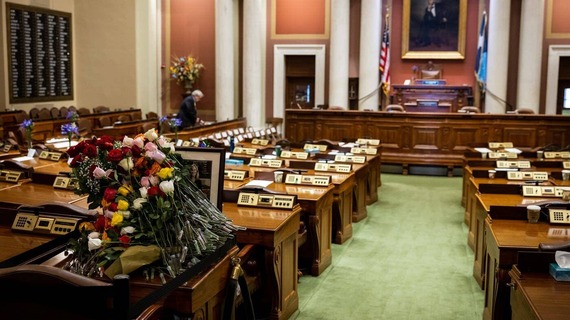
Speaker Emerita Melissa Hortman’s desk, in the House Chamber, following the remembrance service on February 17th, 2026.
Looking Ahead to the 2026 Session
The 2026 Legislative Session officially began on February 17th, and it is important to first recognize all that has taken place since we last entered the House Chamber on June 10, 2025. Minnesota has been in the headlines constantly for a wide range of reasons. Close to home for many of us at the Capitol was the shocking and devastating assassination of Speaker Emerita Melissa Hortman and her husband Mark. The first day of this session was dedicated to Melissa, Mark, and their dog, Gilbert, who passed away last June. I am grateful for the opportunity we had to reflect on their lives and come together to grieve and remember.
As we move into legislative business, we remain focused on many of the same core priorities we discussed last session. For far too long, Minnesotans have been saying that our state is becoming increasingly unaffordable. Between taxes, housing, health care, vehicles, and everyday expenses, the bottom line is that costs continue to rise steadily. Families feel this reality every month as they sit down to balance their budgets and realize the numbers do not stretch as far as they once did. One major contributor to this problem is the amount of taxpayer dollars lost to fraud. Some estimates place the total above $9 billion, or roughly $3,840 per Minnesota household. Those losses impact everyone. Taxpayers are left covering the cost, individuals in need are deprived of critical services, and legitimate providers face increased scrutiny. This should not be a partisan issue, and even with the House tied 67–67, we have an opportunity to make meaningful progress.
Another priority this session is restoring Minnesota’s economic competitiveness. For decades, businesses chose Minnesota for headquarters, expansion, and long-term investment. Increasingly, however, both large and small employers are finding it too expensive to operate here. Other states offer more favorable conditions, drawing investment and jobs away. One recent challenge has been implementation of the Paid Family and Medical Leave program. I support the concept of allowing workers time to care for children, parents, spouses, or themselves, but the structure of this program has created real strain for employers, particularly small businesses. In Southern Minnesota, small businesses, including our agricultural family businesses, are essential to our local economies, providing jobs and sustaining our communities. The current structure has proven unsustainable for some, and participation levels are already exceeding projections, raising concerns about long-term funding and potential tax increases. I am hopeful we can review the program this session and make adjustments that protect businesses while preserving this benefit for workers who truly need it.
These are just a few of the priorities ahead, and the list could certainly be longer, but above all I hope we can work together. With the House evenly divided, any legislation that advances will require bipartisan support. Minnesota needs thoughtful, cooperative leadership, and I look forward to making meaningful progress this session. As always, thank you for your trust in me as your state representative, and please reach out if you have any questions, comments, or concerns.
###